Picture this: you’re making a delicious pesto, but you're out of fresh basil! A quick trip to the grocery store solves the problem, but what if you could extend the life of that store-bought basil and create an endless supply? The good news is, with a little know-how, you absolutely can! Growing Basil From Store-Bought: A Complete Guide So, can you really grow basil from store bought bunches? Absolutely! It's a fantastic way to save money, reduce waste, and enjoy fresh basil whenever you need it. However, the success of growing basil from store bought depends on a few key factors. This article will walk you through the entire process, from selecting the right basil to harvesting your homegrown leaves. We'll cover everything you need to know to successfully propagate basil from your grocery store haul. Selecting the Right Store-Bought Basil for Propagation Not all store-bought basil is created equal when it comes to propagation. To increase your ...
Imagine fresh, fragrant basil available year-round, even in the dead of winter. No more sad, wilted grocery store herbs! Growing your own basil indoors under lights is easier than you might think, and the reward of having that burst of fresh flavor on hand whenever you need it is absolutely worth the effort.
Why Grow Basil Indoors Under Lights?
There are several compelling reasons to consider growing basil indoors. The most obvious is having a constant supply of fresh basil, regardless of the season or your climate. But it goes beyond that.
- Year-Round Harvest: No longer limited by frost or short growing seasons. Enjoy fresh basil for pesto, pasta, salads, and more, whenever the craving hits.
- Control Over Growing Conditions: Indoor gardening allows you to precisely control temperature, humidity, and light, leading to healthier and more productive plants. This is particularly useful if you live in an area with harsh winters or very hot summers.
- Pest and Disease Management: Indoor environments are generally less susceptible to pests and diseases than outdoor gardens, reducing the need for pesticides.
- Convenience: Fresh basil is readily available right in your kitchen. No more last-minute trips to the store!
- Therapeutic Benefits: Gardening can be a relaxing and rewarding hobby. The act of nurturing plants can reduce stress and improve your overall well-being.
Consider the difference in cost, too. A single package of fresh basil from the grocery store can be expensive, especially out of season. Investing in a small indoor growing setup and a packet of basil seeds will pay for itself in no time.
Choosing the Right Basil Variety for Indoor Growing
Not all basil varieties are created equal, especially when it comes to indoor cultivation. Some varieties are more compact and better suited for smaller spaces. Here are a few excellent choices for growing basil indoors under lights:
- Genovese Basil: This is the classic basil most people are familiar with. It's known for its large, fragrant leaves and is perfect for pesto. While it can grow relatively large, regular pruning can keep it manageable indoors.
- Dwarf Basil: As the name suggests, dwarf basil varieties are much smaller than Genovese basil, making them ideal for smaller pots and limited spaces. 'Spicy Globe' is a popular dwarf basil known for its compact size and strong flavor.
- Thai Basil: Thai basil has a distinctive anise-like flavor and aroma. It's a great choice for Southeast Asian cuisine. It tends to be more heat-tolerant than other basil varieties.
- Lemon Basil: Lemon basil has a refreshing citrusy aroma and flavor. It's a great addition to salads, teas, and desserts.
- Purple Basil: While grown more for ornamental purposes, purple basil still offers a unique flavor to cooking. Be aware that it may require more light than other varieties to maintain its vibrant color.
When selecting seeds, look for varieties specifically labeled as "compact" or bushy.These varieties are generally better suited for container gardening and indoor growing.
Setting Up Your Indoor Basil Garden Under Lights
Now for the fun part: setting up your indoor basil garden! This doesn't have to be expensive or complicated. Here's what you'll need:
Choosing the Right Grow Lights for Basil
Light is arguably the most crucial factor for successfully growing basil indoors. Basil needs at least 6-8 hours of direct sunlight per day, which can be difficult to achieve indoors, especially during the winter months. That's where grow lights come in.
There are several types of grow lights available, each with its own pros and cons:
- LED Grow Lights: LEDs are the most energy-efficient option and produce very little heat, making them ideal for indoor growing. They also have a long lifespan. Look for full-spectrum LED grow lights, which provide the full range of light wavelengths that plants need for healthy growth.
- Fluorescent Grow Lights (T5 or T8): Fluorescent lights are a more affordable option than LEDs, but they are less energy-efficient and produce more heat. They are still a good choice for starting seedlings or growing small plants.
- High-Intensity Discharge (HID) Grow Lights: HID lights (such as HPS and MH) are very powerful and produce a lot of light, but they also generate a lot of heat. They are typically used for larger indoor growing operations.
For growing basil indoors, LED or fluorescent grow lights are generally the best choice. A good rule of thumb is to aim for 20-40 watts of light per square foot of growing space.
Light Placement: Position your grow lights about 6-12 inches above the top of the basil plants. As the plants grow, you'll need to adjust the height of the lights to maintain the proper distance. Use a timer to ensure that your basil plants receive 14-16 hours of light per day. The plants need a dark period as well, or they won’t thrive.
Choosing the Right Containers and Soil for Basil
The container and soil you use are also important for the health of your basil plants.
- Containers: Choose pots that are at least 6 inches in diameter. Make sure the pots have drainage holes to prevent waterlogging. Terracotta pots are a good choice because they allow the soil to breathe, but plastic pots are also fine.
- Soil: Use a well-draining potting mix specifically formulated for herbs or vegetables. Avoid using garden soil, as it can be too heavy and may contain pests or diseases. You can also add perlite or vermiculite to improve drainage.
A good potting mix should be lightweight, airy, and rich in nutrients. It should also retain moisture without becoming waterlogged.
Other Essential Supplies for Your Indoor Basil Garden
- Seeds: Select high-quality basil seeds from a reputable source.
- Watering Can or Spray Bottle: For watering your plants.
- Fertilizer: A balanced liquid fertilizer formulated for herbs or vegetables.
- Pruning Shears or Scissors: For trimming and harvesting your basil.
- Timer: To automate the lighting schedule.
- Seed Starting Tray (Optional): If you plan to start your basil seeds indoors.
With the right tools and setup, you'll be well on your way to growing healthy and flavorful basil indoors.
Planting and Caring for Your Indoor Basil Plants
Now that you have your setup ready, it's time to plant and care for your basil plants. This is the part where you get to nurture your green friends and watch them grow!
Starting Basil Seeds Indoors
You can start basil seeds directly in the pots where they will grow, or you can start them in a seed starting tray and transplant them later. Starting seeds indoors gives you a head start on the growing season and allows you to control the germination environment.
- Sow the Seeds: Fill your seed starting tray or pots with potting mix. Moisten the soil and sow the basil seeds about 1/4 inch deep.
- Provide Warmth and Moisture: Cover the tray or pots with a clear plastic dome or plastic wrap to create a humid environment. Place the tray or pots in a warm location (around 70-75°F).
- Germination: Basil seeds typically germinate in 5-10 days. Once the seedlings emerge, remove the plastic cover and place the tray or pots under grow lights.
- Transplanting (if necessary): Once the seedlings have developed a few sets of true leaves, you can transplant them into larger pots. Be gentle when transplanting to avoid damaging the roots.
When transplanting, space the basil plants about 4-6 inches apart to allow for adequate airflow and growth.
Watering and Fertilizing Basil Plants
Proper watering and fertilization are crucial for healthy basil growth. Overwatering and underwatering can both lead to problems.
- Watering: Water your basil plants when the top inch of soil feels dry to the touch. Avoid overwatering, as this can lead to root rot. Water deeply, allowing the excess water to drain out of the bottom of the pot.
- Fertilizing: Feed your basil plants with a balanced liquid fertilizer every 2-3 weeks. Follow the instructions on the fertilizer label. Avoid over-fertilizing, as this can burn the roots.
A good way to test the soil moisture is to stick your finger into the soil. If the soil feels dry and crumbly, it's time to water. If the soil feels wet and sticky, hold off on watering.
Pruning and Harvesting Basil
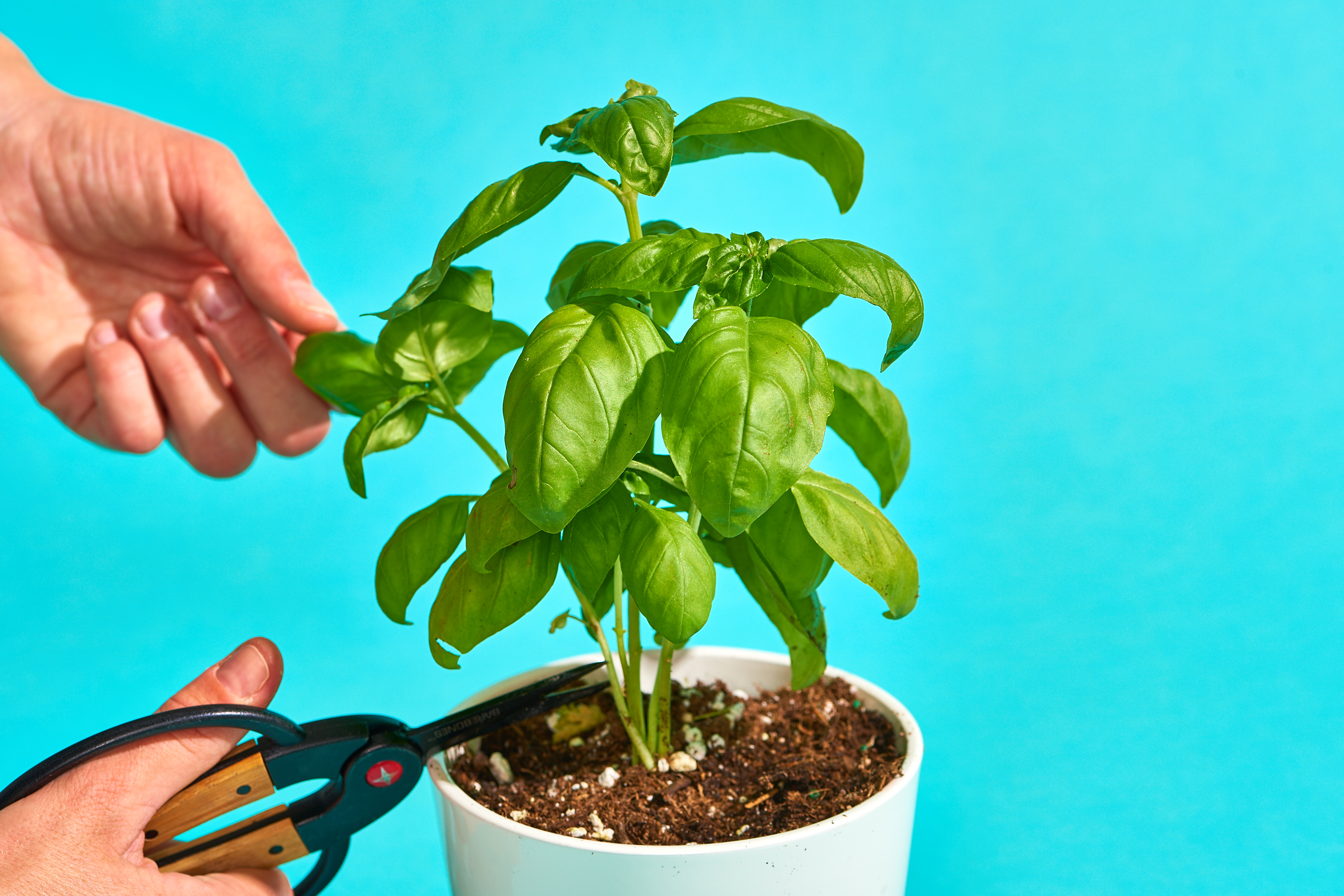
Pruning and harvesting basil regularly is essential for encouraging bushy growth and preventing the plants from flowering. When basil flowers, it stops producing leaves and the leaves can become bitter.
- Pinching: Pinch off the top set of leaves on each stem to encourage the plant to branch out.
- Harvesting: Harvest basil leaves by cutting the stems just above a leaf node. This will encourage new growth from the leaf node.
- Removing Flower Buds: As soon as you see flower buds forming, pinch them off to encourage continued leaf production.
Don't be afraid to harvest your basil plants heavily. The more you harvest, the more they will grow! Regularly harvesting your basil will ensure a continuous supply of fresh leaves.
Troubleshooting Common Basil Problems
Even with the best care, you may encounter some problems when growing basil indoors. Here are a few common issues and how to address them:
- Yellowing Leaves: This can be caused by overwatering, underwatering, nutrient deficiencies, or lack of light. Adjust your watering and fertilization practices and ensure that your basil plants are receiving enough light.
- Leggy Growth: This is usually a sign of insufficient light. Move your basil plants closer to the grow lights or increase the intensity of the lights.
- Pests: Common indoor plant pests include aphids, spider mites, and whiteflies. Inspect your basil plants regularly for pests. You can treat infestations with insecticidal soap or neem oil.
- Root Rot: This is caused by overwatering. Make sure your pots have drainage holes and allow the soil to dry out slightly between waterings.
By being observant and addressing problems promptly, you can keep your basil plants healthy and productive.
Enjoying Your Homegrown Basil
The best part about growing basil indoors is being able to enjoy the fresh, flavorful leaves in your cooking. Here are just a few ways to use your homegrown basil:
- Pesto: Blend fresh basil leaves with pine nuts, garlic, Parmesan cheese, and olive oil for a classic pesto sauce.
- Salads: Add fresh basil leaves to salads for a burst of flavor.
- Pasta Dishes: Sprinkle fresh basil leaves over pasta dishes for a finishing touch.
- Pizza: Use fresh basil leaves as a topping for pizza.
- Soups: Add fresh basil leaves to soups and stews for added flavor.
- Teas: Brew fresh basil leaves into a refreshing herbal tea.
Experiment with different basil varieties and find your favorite ways to use them. With a little care and attention, you can enjoy fresh, homegrown basil year-round.
Speaking of taking care of your garden, whether it's indoors or out, a reliable watering solution is a must. For all your watering needs, consider a versatile garden hose like a resilient75 FT Garden Watering Hose that comes with a convenient 10-function nozzle. It boasts leak-proof metal connectors and is designed to be kink-free for easy use in your garden, yard, or outdoor space. Find it here: https://amzn.to/3Yv E0Bo.